
Dhootpapeshwar Mahayograj Guggul Benefits: Uses, Dosage & Side Effects

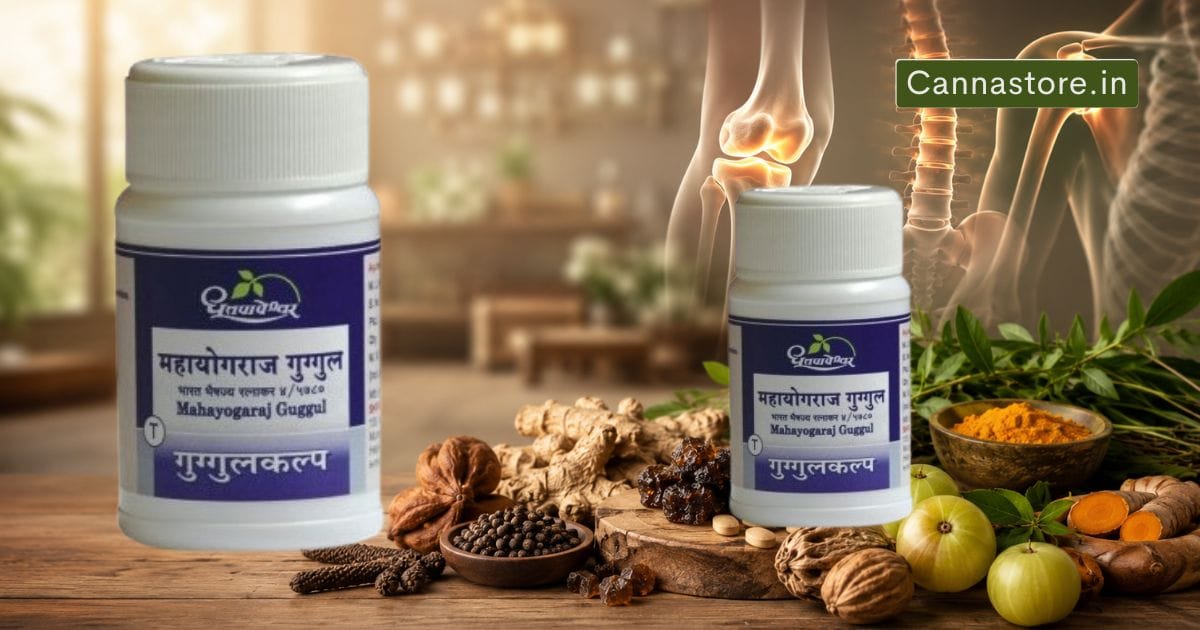
Joint pain, muscle stiffness, back pain, and reduced mobility can affect your daily life and overall well-being. If you’ve been searching for Dhootpapeshwar Mahayograj Guggul Benefits, you’re likely looking for a trusted Ayurvedic remedy that may support joint health, improve flexibility, and help manage Vata-related disorders naturally. This classical Ayurvedic formulation has been used for generations and remains a popular choice among Ayurvedic practitioners for musculoskeletal health.
In this comprehensive guide, you’ll learn what Dhootpapeshwar Mahayograj Guggul is, its traditional Ayurvedic uses, ingredients, potential benefits, recommended dosage, possible side effects, safety precautions, and how it compares with regular Yograj Guggul. We’ll also review the available scientific evidence and provide answers to often asked issues to aid in your decision-making.
While Mahayograj Guggul has a long history of traditional use, it should always be taken under the supervision of a qualified Ayurvedic practitioner, particularly if you are pregnant or nursing, or if you already have a medical problem, or take prescription medications.
Explore the complete range of wellness products available at Cannastore India.
Quick Answer
Dhootpapeshwar Mahayograj Guggul is a classical Ayurvedic herbal-mineral formulation traditionally used to support joint health, muscle function, mobility, and Vata balance. It is commonly recommended in Ayurveda for conditions such as arthritis, joint stiffness, sciatica, cervical spondylosis, and other musculoskeletal disorders. Always adhere to the dosage for safe and efficient use recommended by a qualified Ayurvedic practitioner.
Key Takeaways
- Classical Ayurvedic formulation for joint and muscle health
- Traditionally supports Vata balance
- May help improve mobility and flexibility
- Commonly used for arthritis, back pain, and stiffness
- Contains Guggulu, Ayurvedic herbs, and purified mineral preparations
- Best used under professional Ayurvedic guidance
- Not intended to replace conventional medical treatment
Looking for traditional Ayurvedic tablets? Check out Trailokya Vijaya Vati Tablet 500mg – Sanan Relief.
What Is Dhootpapeshwar Mahayograj Guggul?
Introduction to Mahayograj Guggul
Dhootpapeshwar Mahayograj Guggul is a classical Ayurvedic herbal-mineral formulation traditionally used to support healthy joints, muscles, bones, and nerves. According to Ayurveda, it is especially beneficial for managing Vata-related disorders, which are commonly associated with joint pain, stiffness, reduced mobility, muscle weakness, and chronic musculoskeletal discomfort.
Unlike single-herb supplements, Mahayograj Guggul combines Guggulu (Commiphora mukul) with numerous Ayurvedic herbs and purified mineral preparations (bhasmas). This synergistic combination is designed to balance Vata dosha while nourishing body tissues involved in movement and structural support.
Many people searching for Dhootpapeshwar Mahayograj Guggul Benefits want a natural approach to maintaining joint comfort and flexibility. In traditional Ayurvedic practice, mahayograj guggul uses focus on improving mobility, supporting musculoskeletal health, and promoting overall physical function as part of a holistic treatment plan.
If you’re interested in classical Ayurvedic formulations, explore our guide on Kaishore Guggulu Benefits.
About Dhootpapeshwar Ayurveda
Dhootpapeshwar is one of India’s oldest and most respected Ayurvedic pharmaceutical companies, with a long history of producing authentic classical formulations based on traditional Ayurvedic texts. The company combines time-tested Ayurvedic principles with modern manufacturing and quality-control practices to ensure consistency and product quality.
The mahayograj guggul dhootapapeshwar formulation is prepared using carefully selected herbs and purified ingredients according to classical Ayurvedic methods. Because of its traditional formulation, many Ayurvedic practitioners include it in comprehensive treatment plans that may also involve dietary modifications, yoga, Panchakarma therapies, and lifestyle improvements.
How It Differs from Regular Yograj Guggul
Although Mahayograj Guggul and Yograj Guggul share similar names and both support joint health, they are not the same formulation.
Mahayograj Guggul contains additional purified mineral preparations (bhasmas) alongside herbal ingredients, making it a more comprehensive classical formulation in Ayurveda. These additional ingredients are traditionally believed to provide broader support for chronic Vata-related musculoskeletal conditions.
Regular Yograj Guggul primarily focuses on balancing Vata dosha and maintaining joint comfort. The choice between the two depends on factors such as the individual’s health condition, constitution (Prakriti), age, and the recommendation of a qualified Ayurvedic practitioner.
Ingredients in Dhootpapeshwar Mahayograj Guggul

One of the reasons Mahayograj Guggul has remained an important Ayurvedic medicine for centuries is its carefully balanced combination of herbs and mineral preparations. Each ingredient contributes to the formulation’s traditional role in supporting musculoskeletal health.
Main Ayurvedic Herbs
The formulation typically includes herbs such as:
- Guggulu (Commiphora mukul)
- Triphala
- Trikatu
- Chitrak
- Vidanga
- Rasna
- Devdaru
- Musta
- Haritaki
- Bibhitaki
- Amalaki
- Jeera
- Ajwain
According to Ayurveda, these herbs help maintain digestive strength (Agni), support healthy metabolism, promote tissue nourishment, and balance the body’s doshas.
Role of Guggulu
Guggulu is the primary ingredient and one of Ayurveda’s most valued medicinal resins.
Traditionally, Guggulu is used to:
- Support healthy joints
- Promote flexibility and mobility
- Help maintain a healthy inflammatory response
- Support circulation
- Aid detoxification according to Ayurvedic principles
Modern research has also investigated Guggulu for compounds known as guggulsterones, which have shown promising biological activity in laboratory and early clinical studies. However, more high-quality human research is needed to confirm many traditional uses.
If you’re exploring classical Ayurvedic formulations, read our complete guide on Trayodashang Guggulu Benefits.
Importance of Bhasmas in the Formula
One feature that distinguishes Mahayograj Guggul from regular Yograj Guggul is the inclusion of purified mineral preparations, known as bhasmas.
In Ayurveda, bhasmas are carefully processed using specialized purification methods before being incorporated into formulations. Traditionally, they are believed to:
- Enhance the formulation’s effectiveness
- Nourish bones and muscles
- Support healthy nerve function
- Help balance aggravated Vata dosha
Because bhasma-containing medicines require proper preparation and individualized dosing, they should only be taken under professional supervision.
How the Ingredients Work Together
Rather than targeting a single symptom, Mahayograj Guggul is designed as a synergistic formulation.
According to Ayurvedic principles, its ingredients work together to:
- Balance Vata dosha
- Support healthy digestion and metabolism
- Nourish bones and joints
- Maintain muscle strength
- Improve flexibility
- Promote healthy circulation
- Support overall mobility
This holistic approach is one reason Mahayograj Guggul continues to be widely used in traditional Ayurvedic practice.
Ingredient Overview
| Ingredient | Traditional Ayurvedic Role | Potential Benefit |
|---|---|---|
| Guggulu | Balances Vata | Supports joint health and mobility |
| Triphala | Supports digestion | Helps maintain healthy metabolism |
| Trikatu | Enhances Agni | Improves digestion and absorption |
| Rasna | Balances Vata | Traditionally supports joint comfort |
| Devdaru | Musculoskeletal support | Helps maintain healthy movement |
| Chitrak | Digestive support | Promotes metabolic balance |
| Purified Bhasmas | Tissue nourishment | Traditionally supports bones and muscles |
Dhootpapeshwar Mahayograj Guggul Benefits
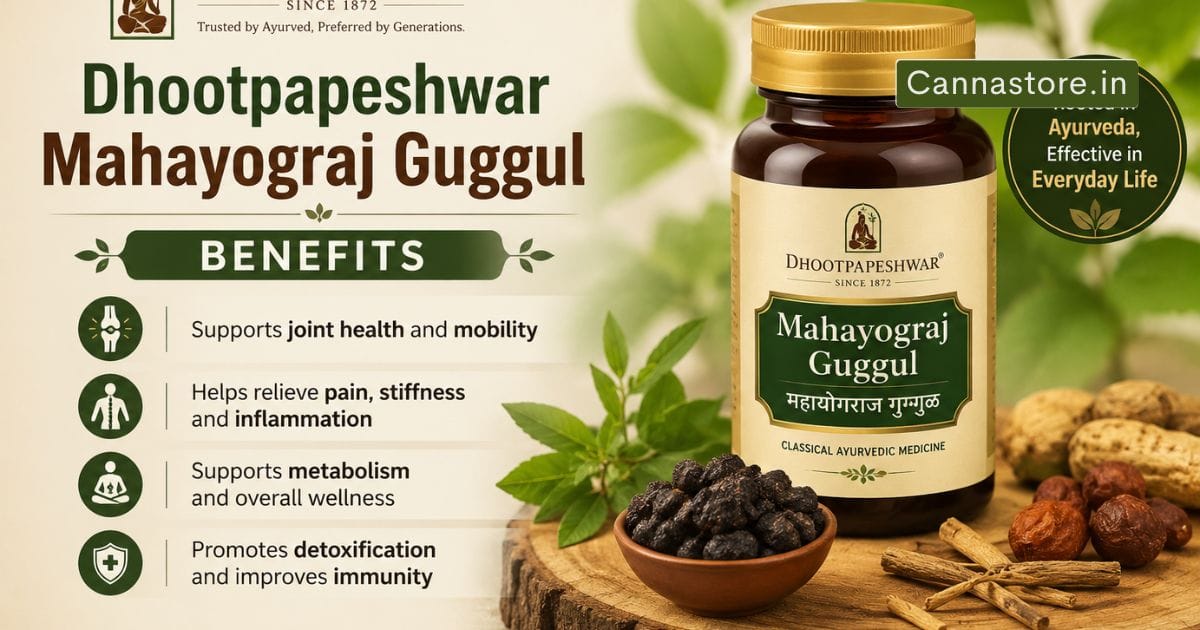
The primary reason people choose this Ayurvedic formulation is its long-standing traditional use in supporting joint and musculoskeletal health. While scientific evidence is still developing, Ayurvedic practitioners have recommended Mahayograj Guggul for centuries as part of holistic treatment plans for Vata-related conditions.
Supports Joint Health
One of the most recognized Dhootpapeshwar Mahayograj Guggul Benefits is its traditional role in maintaining healthy joints. According to Ayurveda, the formulation helps balance Vata dosha, which plays an important role in joint flexibility, lubrication, and comfortable movement.
Helps Manage Arthritis Symptoms
Mahayograj Guggul is commonly included in Ayurvedic management plans for arthritis. It is traditionally used to support joint comfort, improve flexibility, and reduce stiffness. However, it should complement—not replace—medical treatment recommended by your healthcare provider.
Reduces Joint Stiffness
Morning stiffness and reduced flexibility can interfere with daily activities. Ayurveda traditionally recommends Mahayograj Guggul to help improve joint mobility while supporting healthy circulation and balanced Vata.
Supports Muscle Strength
Robust muscles aid in joint protection and stabilization. Mahayograj Guggul is traditionally believed to nourish muscle tissue and support healthy muscular function when combined with proper nutrition and regular physical activity.
Helps Balance Vata Dosha
According to Ayurvedic principles, aggravated Vata may contribute to:
- Joint pain
- Muscle stiffness
- Dryness
- Cracking joints
- Reduced flexibility
Mahayograj Guggul is formulated to help restore Vata balance and promote musculoskeletal comfort.
Supports Healthy Mobility
Maintaining mobility is essential for everyday activities and healthy aging. Traditionally, Mahayograj Guggul is used to promote smoother movement and better flexibility, particularly in people experiencing age-related joint discomfort.
May Help in Chronic Pain Management
Ayurvedic practitioners often include Mahayograj Guggul as part of a long-term wellness strategy for chronic musculoskeletal discomfort. Along with the medicine, recommendations may include yoga, therapeutic massage, dietary improvements, and lifestyle modifications.
Supports Bone Health
The formulation’s combination of herbs and purified mineral preparations is traditionally believed to nourish bone tissue and support skeletal health. Maintaining strong bones still requires a balanced diet and consistent activity.
Improves Overall Physical Function
By supporting joint flexibility, muscle function, and balanced Vata, Mahayograj Guggul may contribute to improved physical movement and overall quality of life when used appropriately under professional guidance.
Ayurvedic Uses of Mahayograj Guggul
Dhootpapeshwar Mahayograj Guggul is a classical Ayurvedic medicine primarily used to manage Vata-related disorders affecting the joints, muscles, bones, and nervous system. In Ayurveda, it is often prescribed as a component of a comprehensive therapy strategy that incorporates food and behavioral adjustments, yoga, and other supportive therapies.
Although mahayograj guggul uses are widely described in Ayurvedic texts, it should be used under the guidance of a qualified Ayurvedic practitioner. Individual treatment plans vary based on a person’s health condition, body constitution (Prakriti), and symptom severity.
Vata Disorders
According to Ayurveda, an aggravated Vata dosha can lead to symptoms such as:
- Joint pain
- Muscle stiffness
- Dryness
- Cracking joints
- Reduced flexibility
- Nerve discomfort
Mahayograj Guggul is traditionally used to help restore Vata balance and support healthy movement throughout the body.
Rheumatoid Arthritis
In Ayurveda, rheumatoid arthritis is commonly associated with Amavata, a condition involving the accumulation of toxins (Ama) and aggravated Vata. Mahayograj Guggul is traditionally included in treatment plans to support joint comfort, reduce stiffness, and improve mobility.
Individuals with rheumatoid arthritis should continue their prescribed medical treatment and consult both their physician and Ayurvedic practitioner before adding herbal supplements.
Osteoarthritis
Osteoarthritis is characterized by gradual degeneration of joint cartilage and age-related wear and tear. Ayurveda traditionally recommends Mahayograj Guggul to support healthy joint function, flexibility, and comfortable movement.
Maintaining a healthy weight, continuing to exercise, and adhering to an anti-inflammatory diet may further support joint health.
Sciatica
Pain from sciatica travels from the lower back to the legs and hips. According to Ayurvedic principles, it is often linked with Vata imbalance.
Mahayograj Guggul is traditionally used alongside therapies such as Abhyanga (Ayurvedic massage), stretching exercises, and Panchakarma to support nerve and muscle health.
Cervical Spondylosis
Neck stiffness and cervical spondylosis can reduce mobility and interfere with daily activities.
Ayurvedic practitioners may recommend Mahayograj Guggul as part of a comprehensive treatment plan that includes posture correction, physiotherapy, and gentle neck exercises.
Frozen Shoulder
Frozen shoulder limits arm movement and causes discomfort during routine activities.
Traditionally, Mahayograj Guggul is combined with therapeutic massage, heat therapy, and prescribed exercises to gradually improve shoulder flexibility.
Back Pain
Back pain is one of the most common reasons people seek Ayurvedic treatment.
Mahayograj Guggul is traditionally used to support spinal health, improve flexibility, and help manage Vata-related lower back discomfort while complementing healthy posture and strengthening exercises.
Knee Pain
Age-related knee discomfort and stiffness are common concerns among older adults.
Ayurvedic practitioners frequently include Mahayograj Guggul in treatment plans designed to support knee mobility, flexibility, and overall joint function.
Muscle Weakness
Traditional Ayurvedic texts describe Mahayograj Guggul as a formulation that supports healthy muscles and physical strength by nourishing body tissues.
For the best results, combine treatment with:
- Regular physical activity
- A balanced diet
- Adequate protein intake
- Proper sleep and recovery
Note: Many people searching yograj guggulu uses in hindiare looking for similar information. However, Mahayograj Guggul and Yograj Guggul are different formulations and should not be considered interchangeable.
How Does Mahayograj Guggul Work?
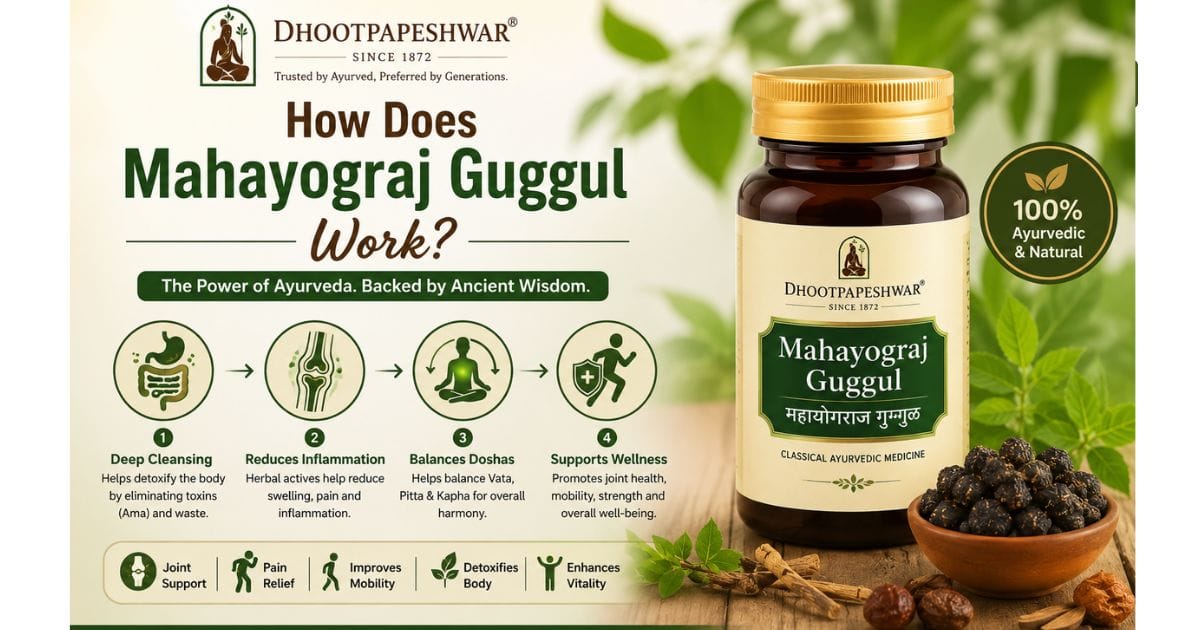
Mahayograj Guggul works through a combination of Ayurvedic principles and the traditional actions of its herbal and mineral ingredients. While modern scientific research is still evolving, its use has been documented in classical Ayurvedic literature for centuries.
Ayurvedic Perspective
According to Ayurveda, health depends on the balance of the three doshas—Vata, Pitta, and Kapha. Mahayograj Guggul is primarily formulated to pacify aggravated Vata, which is commonly associated with pain, stiffness, restricted movement, and musculoskeletal disorders.
The formulation is also traditionally believed to nourish:
- Asthi Dhatu (bone tissue)
- Majja Dhatu (bone marrow and nervous tissue)
- Mamsa Dhatu (muscle tissue)
This holistic approach aims to improve structural strength and overall mobility.
Modern Scientific Understanding
Several herbs used in Mahayograj Guggul, particularly Guggulu (Commiphora mukul), contain naturally occurring compounds called guggulsterones. These substances’ possible anti-inflammatory and antioxidant qualities have been investigated.
Although preliminary research is promising, more excellent clinical research is required to determine the efficacy of the complete Mahayograj Guggul formulation for specific medical conditions.
Anti-inflammatory Properties
Chronic inflammation may contribute to joint discomfort and reduced mobility.
Traditional Ayurvedic herbs present in Mahayograj Guggul have long been used to support the body’s natural inflammatory response. However, this formulation should not replace medications prescribed by your healthcare provider unless specifically advised.
Joint Lubrication Support
According to Ayurvedic theory, balanced Vata and healthy body tissues help maintain smooth joint movement.
Mahayograj Guggul is traditionally believed to support:
- Healthy joint flexibility
- Comfortable movement
- Tissue nourishment
- Musculoskeletal function
Who Can Benefit Most?
While Mahayograj Guggul is not suitable for everyone, several groups may benefit from its traditional Ayurvedic uses when it is prescribed appropriately.
Elderly Individuals
As people age, joint stiffness and reduced flexibility become more common.
Mahayograj Guggul is traditionally used to support:
- Comfortable movement
- Joint flexibility
- Healthy mobility
- Active aging
Office Workers
Long hours of sitting may contribute to:
- Neck stiffness
- Shoulder discomfort
- Lower back pain
- Poor posture
Office workers may benefit from combining Ayurvedic treatment with ergonomic improvements, stretching breaks, and regular exercise.
Athletes
Physically active individuals occasionally experience muscle soreness or joint strain after intense training.
Under professional supervision, Mahayograj Guggul may be included as part of a recovery plan alongside:
- Proper nutrition
- Adequate hydration
- Rest
- Strength training
- Flexibility exercises
People with Chronic Joint Pain
Individuals living with long-term musculoskeletal discomfort often seek complementary approaches in addition to conventional care.
Ayurvedic practitioners may recommend Mahayograj Guggul to help support mobility and improve overall quality of life.
Individuals with Vata Imbalance
People experiencing symptoms traditionally associated with aggravated Vata may benefit from Ayurvedic evaluation.
Common symptoms include:
- Dry joints
- Stiffness
- Cracking sounds
- Variable pain
- Cold extremities
- Muscle tightness
Recommended Dosage and How to Take It
The correct dosage depends on your age, health condition, digestive strength, and your Ayurvedic practitioner’s recommendation.
Standard Adult Dosage
A commonly recommended dosage is:
1–2 tablets, two to three times daily after meals, taken with:
- Lukewarm water
- Warm milk
- Or as directed by an Ayurvedic physician
Never exceed the recommended dosage.
Best Time to Take
Mahayograj Guggul is generally taken after meals to improve tolerability and support digestion.
Taking it at the same time each day can also improve treatment consistency.
Duration of Use
Ayurvedic medicines often work gradually.
Depending on your condition, your practitioner may recommend using Mahayograj Guggul for several weeks or months while monitoring your progress.
Foods to Prefer During Treatment
Following an Ayurvedic-friendly diet may help support treatment outcomes.
Choose foods such as:
- Warm home-cooked meals
- Seasonal vegetables
- Fresh fruits
- Whole grains
- Healthy fats in moderation
- Protein-rich foods
- Plenty of water
Foods to Avoid
Limit foods that may aggravate Vata or interfere with digestion, including:
- Highly processed foods
- Deep-fried meals
- Cold beverages
- Excess sugar
- Heavy late-night dinners
- Excess alcohol
Dos and Don’ts
Do
- Follow your prescribed dosage.
- Stay physically active.
- Perform gentle stretching or yoga.
- Maintain a healthy body weight.
- Drink enough water.
- Tell your doctor about all the medications and supplements you take.
Don’t
- Self-medicate for chronic pain.
- Increase the dosage without advice.
- Expect overnight results.
- Stop prescribed medications without consulting your doctor.
- Share your medicine with others.
Side Effects of Dhootpapeshwar Mahayograj Guggul
When taken in the recommended dosage under the supervision of a qualified Ayurvedic practitioner, Dhootpapeshwar Mahayograj Guggul is generally well tolerated by many adults. However, like any Ayurvedic or herbal formulation, it may not be suitable for everyone. Individual responses can vary depending on age, general health, current health issues, and other drugs being taken.
Possible Mild Side Effects
The majority of consumers don’t have any serious adverse effects when the medicine is used appropriately. However, some individuals may experience mild symptoms such as:
- Stomach discomfort
- Acidity or heartburn
- Mild nausea
- Loose stools
- Digestive upset
- Allergic reactions to herbal ingredients (rare)
If you notice persistent digestive issues, skin rashes, swelling, or breathing difficulties, discontinue use and seek medical attention immediately.
Who Should Avoid It?
Mahayograj Guggul may not be suitable for everyone. Consult your healthcare provider before taking it if you:
- Have severe liver disease
- Have kidney disorders
- Are allergic to any of its ingredients
- Have uncontrolled chronic illnesses
- Are under 18 years of age unless prescribed
- Have recently undergone major surgery
Pregnancy and Breastfeeding
There is not enough scientific data to determine the safety of Mahayograj Guggul during pregnancy and breastfeeding.
Pregnant or breastfeeding women should only use this medicine if specifically advised by a qualified Ayurvedic physician or healthcare provider.
Drug Interactions
Herbal medicines can interact with prescription medications.
Speak with your healthcare provider if you are taking:
- Blood-thinning medications
- Diabetes medicines
- Blood pressure medications
- Thyroid medicines
- Immunosuppressants
- Long-term pain medications
Overdose Risks
Taking more than the recommended dose does not improve results and may increase the risk of digestive discomfort or other unwanted effects.
Always follow your Ayurvedic practitioner’s instructions.
Precautions Before Taking Mahayograj Guggul
Using Ayurvedic medicines responsibly is essential for achieving the best possible outcomes.
Medical Conditions to Discuss
Before starting Mahayograj Guggul, inform your healthcare provider if you have:
- Diabetes
- Hypertension
- Autoimmune diseases
- Liver disorders
- Kidney disorders
- Digestive diseases
- Thyroid disorders
This helps determine whether the formulation is appropriate for your individual health needs.
Allergies
Review the ingredient list carefully before use.
If you’ve ever had an adverse response to herbal medicines or Ayurvedic formulations, seek professional advice before starting treatment.
Liver and Kidney Disorders
People with mild to severe liver or renal disease disease should only use Mahayograj Guggul under close medical supervision because herbal ingredients may be processed differently in these conditions.
Long-Term Use Considerations
Some people may require Mahayograj Guggul for extended periods depending on their health condition.
Long-term use should include:
- Regular medical reviews
- Periodic Ayurvedic assessment
- Monitoring of symptoms
- Dosage adjustments when necessary
Avoid prolonged self-medication without professional guidance.
If you’re comparing classical Ayurvedic formulations, explore our guide on Unjha Yograj Guggulu Benefits.
Dhootpapeshwar Mahayograj Guggul vs Yograj Guggul
Although these two Ayurvedic formulations are closely related, they serve slightly different purposes.
Ingredient Differences
The main distinction is that Mahayograj Guggul contains additional purified mineral preparations (bhasmas) along with classical herbal ingredients.
Yograj Guggul primarily contains herbs designed to balance Vata dosha and support joint health.
Benefits Comparison
Both formulations are traditionally used for musculoskeletal disorders, but Mahayograj Guggul is generally considered a more comprehensive formulation for long-standing or complex Vata disorders.
Yograj Guggul is often recommended for general joint support and early-stage musculoskeletal concerns.
Which One Is Better?
There is no universal answer.
The better option depends on:
- Your symptoms
- Ayurvedic diagnosis
- Overall health
- Existing medical conditions
- Practitioner recommendation
A qualified Ayurvedic practitioner can determine which formulation best suits your needs.
Comparison Table
| Feature | Mahayograj Guggul | Yograj Guggul |
|---|---|---|
| Main Ingredients | Herbs + Purified Bhasmas | Primarily Ayurvedic Herbs |
| Traditional Strength | More comprehensive formulation | Classical herbal formulation |
| Common Ayurvedic Use | Chronic Vata disorders, arthritis, musculoskeletal support | General Vata balance and joint support |
| Bhasma Content | Yes | Usually No |
| Best Suited For | Long-term musculoskeletal support under supervision | General joint wellness |
| Typical Users | Individuals with chronic joint and muscle conditions | Individuals seeking traditional joint support |
Scientific Research and Ayurvedic Evidence
Ayurvedic Classical References
Mahayograj Guggul has been described in classical Ayurvedic texts and has been prescribed by Ayurvedic practitioners for centuries to support musculoskeletal health and manage Vata-related disorders.
Its traditional use is based on Ayurvedic principles of balancing doshas and nourishing body tissues rather than treating isolated symptoms.
Modern Research on Guggulu
Modern research has explored Commiphora mukul (Guggulu) for its bioactive compounds, particularly guggulsterones, which have demonstrated anti-inflammatory and antioxidant activity in laboratory and some clinical studies.
Researchers continue investigating its potential role in supporting joint health and inflammatory conditions.
Research on Joint Health
Several herbal ingredients used in Mahayograj Guggul have individually shown promising effects in supporting joint function.
However, studies evaluating the complete Mahayograj Guggul formulation remain limited.
Before firm conclusions can be drawn, further excellent, randomized controlled clinical trials are required.
Current Evidence Limitations
Although traditional Ayurvedic use is extensive, modern scientific evidence is still developing.
Current limitations include:
- Small study populations
- Variations in formulations
- Limited long-term human studies
- Differences in research methodology
Therefore, Mahayograj Guggul should be viewed as a traditional Ayurvedic medicine rather than a proven replacement for evidence-based medical treatment.
Reliable sources for further reading include:
- Ministry of AYUSH
- CCRAS, the Central Council for Research in Ayurvedic Sciences
- PubMed
- National Center for Biotechnology Information (NCBI)
- Official Dhootapapeshwar product information
Expert Tips for Maximum Benefits
To get the best results from Mahayograj Guggul:
- Follow the prescribed dosage consistently.
- Combine treatment with an Ayurvedic-friendly diet.
- Stay physically active through walking, stretching, or yoga.
- To lessen joint tension, maintain a healthy body weight.
- Stay well hydrated throughout the day.
- Get sufficient sleep to support recovery.
- Attend regular follow-up appointments if using the medicine long term.
Common Mistakes to Avoid
Avoid these common mistakes when using Mahayograj Guggul:
- Self-medicating without professional advice
- Ignoring dosage recommendations
- Expecting overnight improvements
- Taking it during pregnancy without medical guidance
- Combining it with prescription medicines without informing your healthcare provider
- Stopping treatment too early
- Assuming all Ayurvedic medicines are suitable for every individual
Medical Disclaimer
The sole aims of this article are informational and educational. It does not take the place of expert medical advice, diagnosis, or care. Always consult a qualified Ayurvedic practitioner or healthcare professional before starting Dhootpapeshwar Mahayograj Guggul, especially if you are pregnant, breastfeeding, have an existing medical condition, or take prescription medications.
Conclusion
Dhootpapeshwar Mahayograj Guggul is a respected classical Ayurvedic formulation traditionally used to support joint health, muscle function, mobility, and Vata balance. Its carefully selected blend of Guggulu, Ayurvedic herbs, and purified mineral preparations has made it a trusted choice in Ayurveda for managing musculoskeletal concerns such as joint stiffness, arthritis, back pain, and reduced flexibility.
While many people seek Dhootpapeshwar Mahayograj Guggul benefits for natural support, it is important to understand that individual results may vary and modern clinical evidence is still evolving. The best outcomes are generally achieved when the formulation is used alongside a balanced diet, regular physical activity, healthy lifestyle habits, and guidance from a qualified Ayurvedic practitioner.
If you’re considering this traditional Ayurvedic medicine, speak with a medical expert to find out if it’s appropriate for your particular medical requirements and to guarantee, personalized use.
FAQs
1. What are the main Dhootpapeshwar Mahayograj Guggul benefits?
It is traditionally used to support joint health, muscle strength, mobility, Vata balance, and overall musculoskeletal wellness.
2. Is Mahayograj Guggul good for arthritis?
It is frequently utilized in Ayurveda as a component of an all-encompassing strategy for treating the symptoms of arthritis. It should not replace medical treatment without professional advice.
3. Can Mahayograj Guggul help reduce joint pain?
According to Ayurvedic practice, it may help support joint comfort and flexibility. Individual responses vary.
4. What is the recommended dosage?
Adults are commonly advised should take one or two tablets, twice or three times a day after meals, or as instructed by an Ayurvedic practitioner.
5. Can diabetic patients take Mahayograj Guggul?
Diabetics should speak with their doctor priorDiabetics should speak with their doctor prior starting any Ayurvedic supplement because medication adjustments may be required.
6. Is it safe for long-term use?
It may be used for longer periods under the supervision of a qualified Ayurvedic practitioner, with regular follow-up.
7. What are the possible side effects?
Possible side effects include mild digestive upset, acidity, nausea, or allergic reactions in sensitive individuals.
8. What is the difference between Yograj Guggul and Mahayograj Guggul?
Mahayograj Guggul contains additional purified mineral preparations (bhasmas), while Yograj Guggul is primarily a herbal formulation.
9. Can it help with back pain and sciatica?
Traditionally, Ayurveda uses Mahayograj Guggul to support people with Vata-related back pain and sciatica as part of a holistic treatment plan.
10. Can elderly people take Mahayograj Guggul?
Yes, it is often recommended for older adults experiencing age-related joint stiffness and reduced mobility, provided it is prescribed appropriately.
11. How long does it take to show results?
Ayurvedic medicines generally work gradually. The time required varies depending on the individual’s condition, lifestyle, and adherence to treatment.
12. Can it be taken with allopathic medicines?
It may be possible in some cases, but you should always consult your physician and Ayurvedic practitioner first to avoid potential interactions.